Holding on to a fading memory

Baroma, my great grandma, had a partial index finger. As kids, we would ask her on every visit, why she was missing her finger. Her stories would change with every telling. But the one I remember the most is the one where she was guarding her chicken coop against a fox and the fox bit her finger off. I also remember that my Baroma had a faded tattoo on her forearm. She never told that story. I have this bad feeling that it had to do with the Bengal partition.
My Baroma was always very quiet. She grew quieter as she aged. She lived to be nearly hundred and she hardly ever spoke the last two decades of her life. I wonder if she was an introvert too? Or if she had simply run out of things to say. I suspect she might have been a great storyteller only if she grew up in a different time and place. But as it was, she was a child bride, married to an elderly barrister. She became a widow in her early twenties. And then Bengal got split into east and west and she migrated west with a small child and not much else. She trained herself as a nurse to survive.
With her earnings, she built a two storied house in a small village near Kolkata. I remember loving the house. It had polished concrete floors and verandah. To date, I adore polished concrete floors and verandah. The verandah had a iron lattice frame on one side through which the sun and shade made intricate patterns on the floor. And to date, I love the play of light and shadows through lattices. The concrete floor was so smooth that it was shiny. I remember loving the little village. It is a village no more. But back then, it was picturesque, like the villages in Ray’s movies. The path leading to the house was unpaved. There were ponds around every bend. People’s homes abutted against ponds. Just like in Ray’s movies, folks bathed in the ponds, and washed their clothes in the ponds. Sometimes, women and men would catch small fish in their gamcha (a thin cotton towel), sarees and sarongs while bathing (see a picture from an older article). Like every tropical village in the fertile Gangetic plane, it was green as far as eyes could see. The ponds were full of water poppy, eel grass, and lillies. Banana trees lined the roads. The roof tops would be covered with ash gourd (chal kumro, chal is roof in Bengali and kumro is gourd). Plants grew out of every nook and cranny. If you sat still, perhaps plants would grow around your limbs.
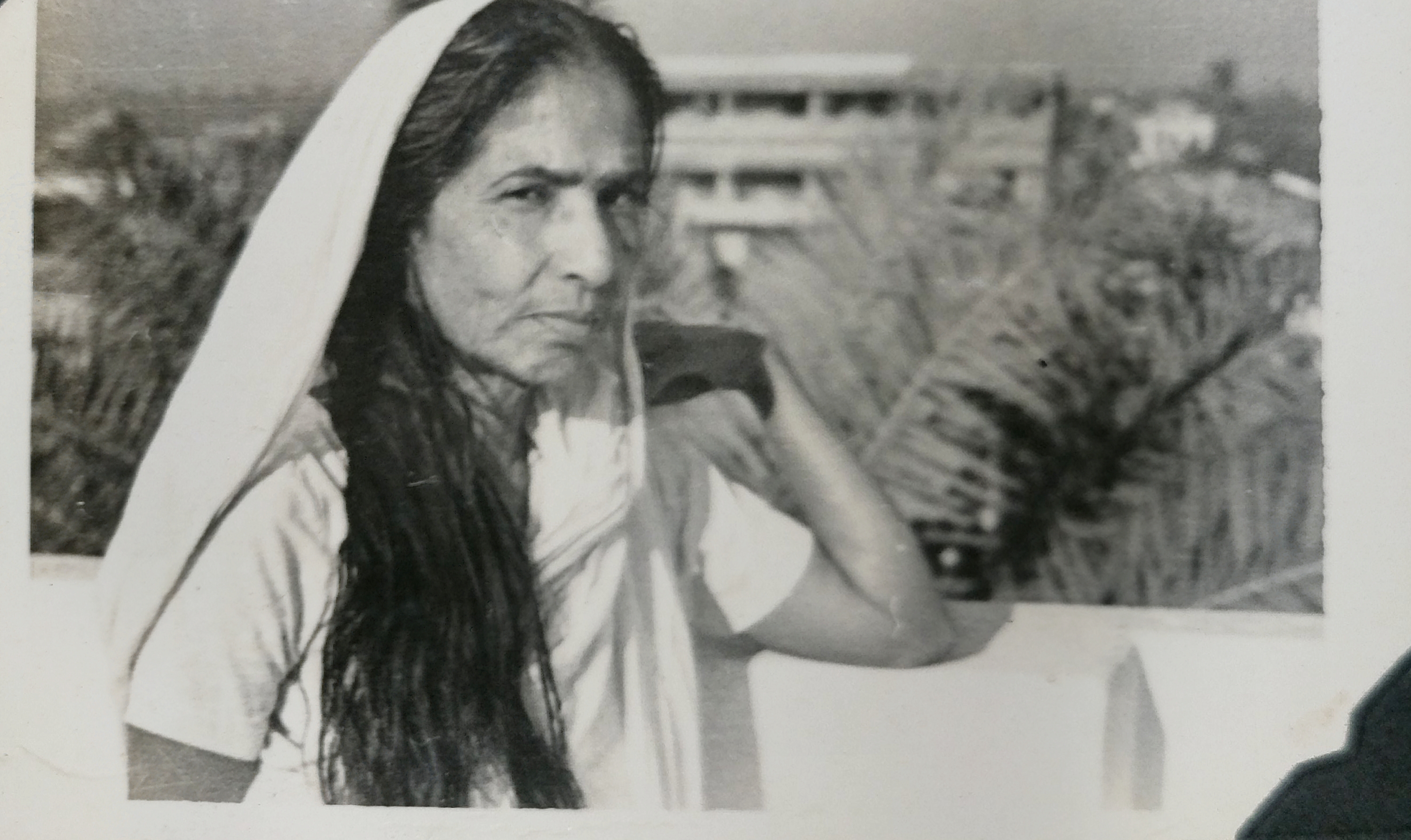
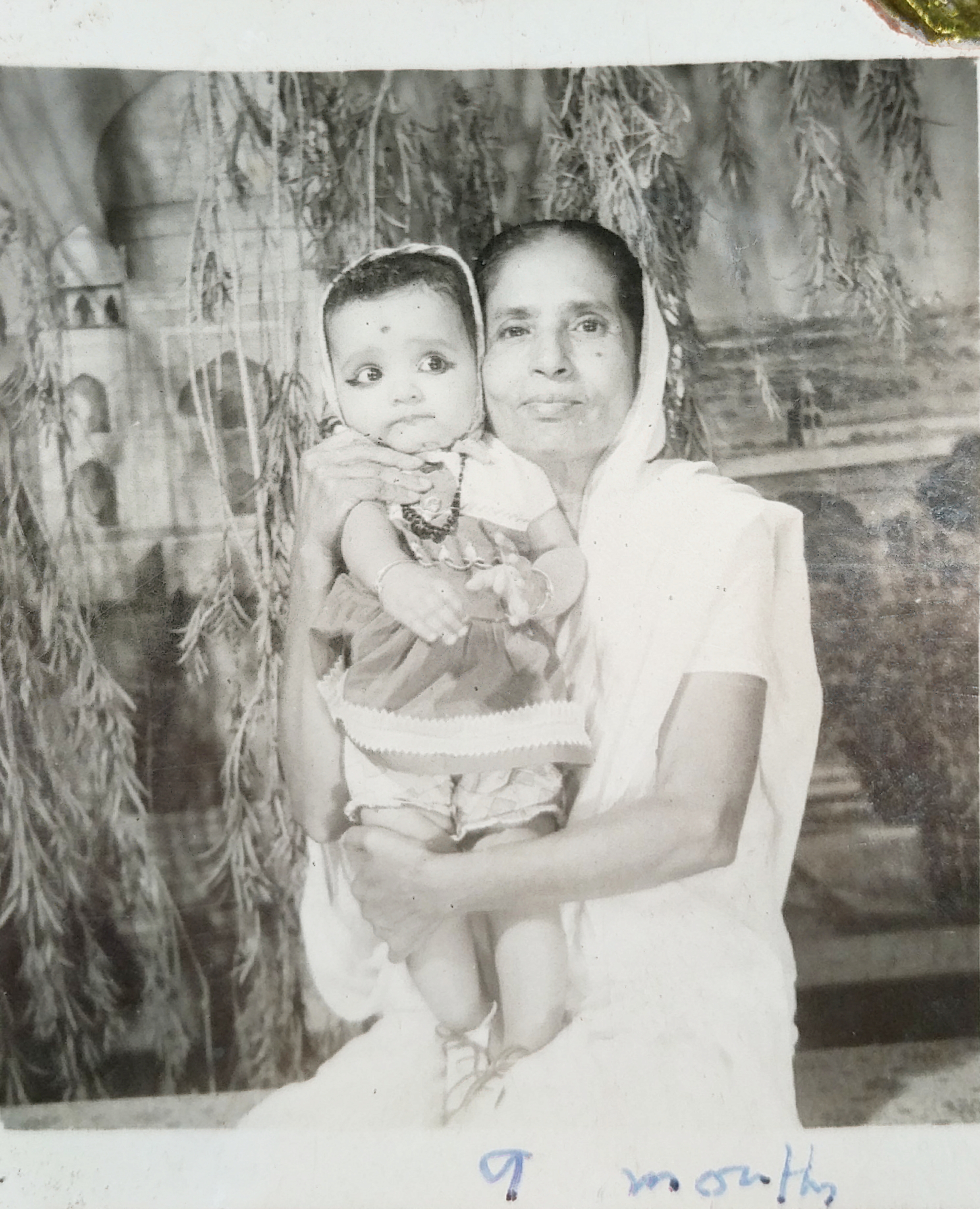
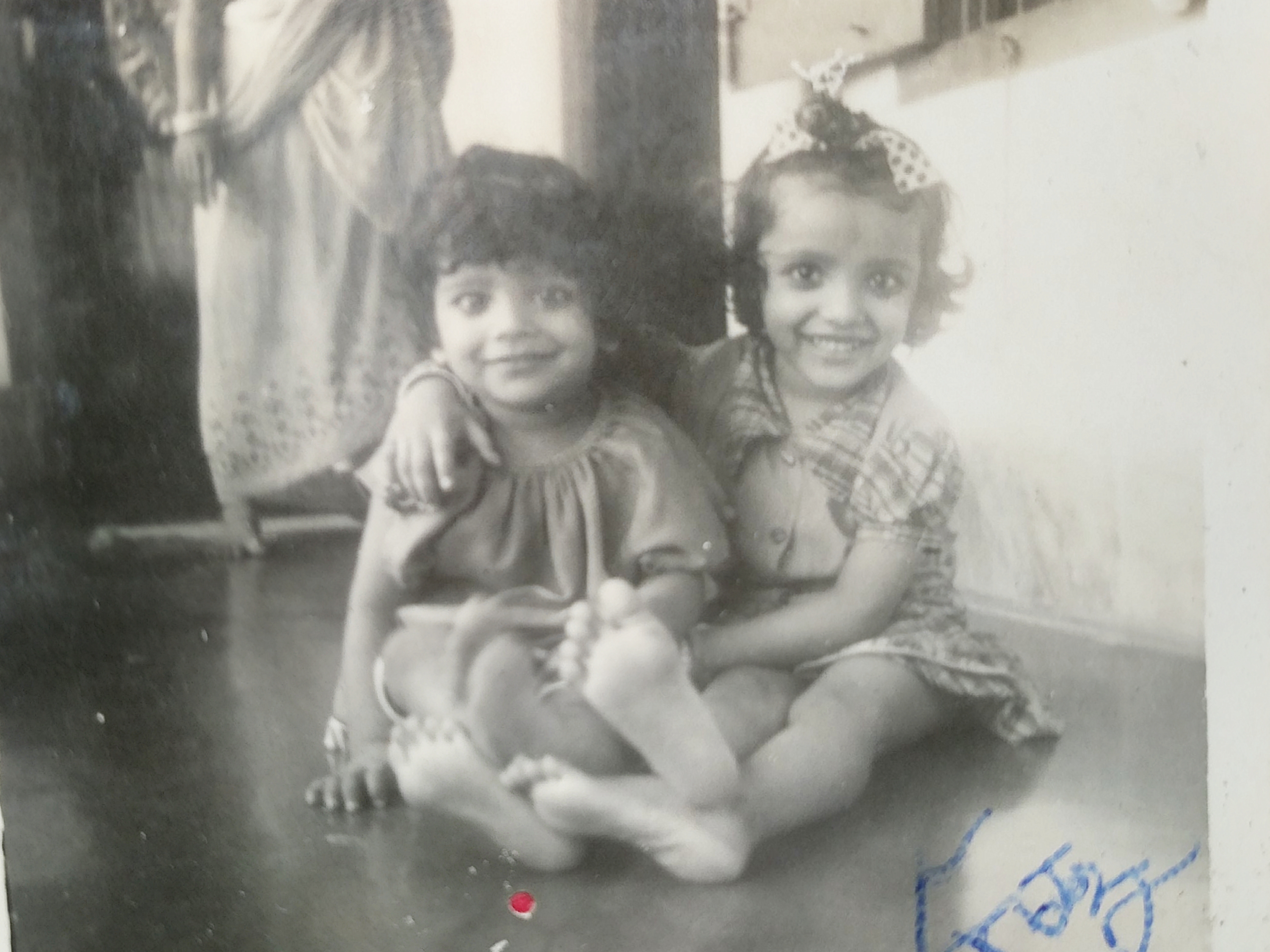
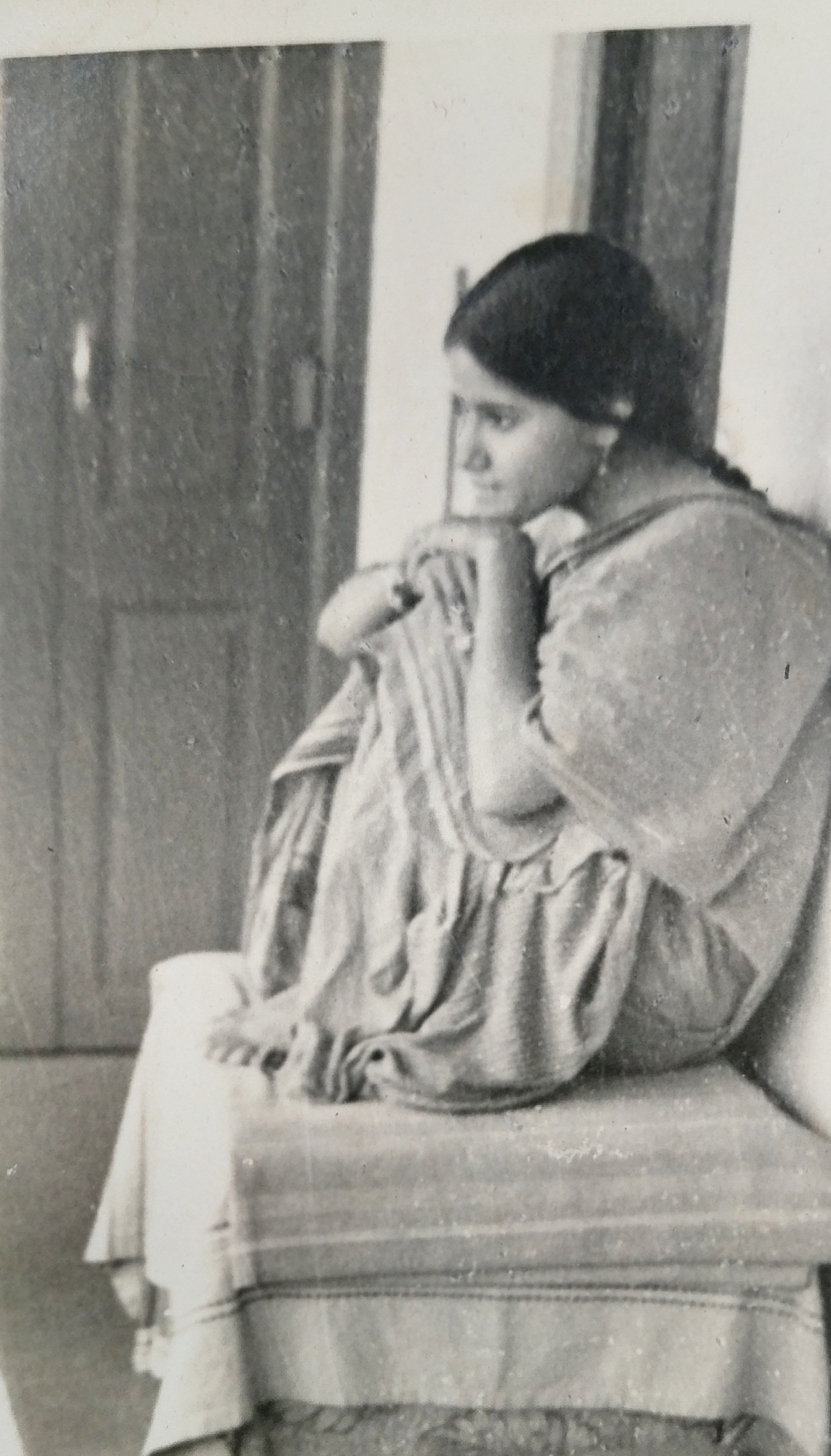
The top two photos are my Baroma. In the right, she is holding my brother when he was little. I don’t think I ever saw her in anything other than a white cotton saree, the kind widows in Bengal wore. She always wore her saree with the Bengali drape. The bottom two are taken in the verandah of her house. The right is mom before she got married – she has a few of these self portraits where she would set up the camera and then run to pose. She was a natural and I simply adore these self portraits. The left one is my brother and I, my brother’s innocent smile is just the same and equally heart warming after half a century. My mom was the family photographer, but I think she is standing behind us in this one – she tends to stand with her weight on the outer edge of her feet.
Baroma’s house in the village had a little coop where she and mom kept ducks for pets. After all, there was a pond around every bend. According to a 2007 research paper, there were 56,000 small ponds in West Bengal! My Baroma and mom also kept a cat, perhaps there was more than one cat during their times together or perhaps neighbor’s cats wandered in. They tend to make appearances in my mom’s self portraits. By the time I grew up and went to live with Baroma and my Didu (my grandma), in the house that my Didu built, Baroma had already grown very quiet. Didu’s house had a verandah too and Baroma would simply sit on a cane stool all day long and watch the world go by.
 Locomotoring
[…] have been remembering my enigmatic great grandmother, the woman with a few words. She had lived a long and quiet life and had passed away last week many […]
A conversation with a museum docent | Locomotoring
March 20, 2025 at 10:48 pm